
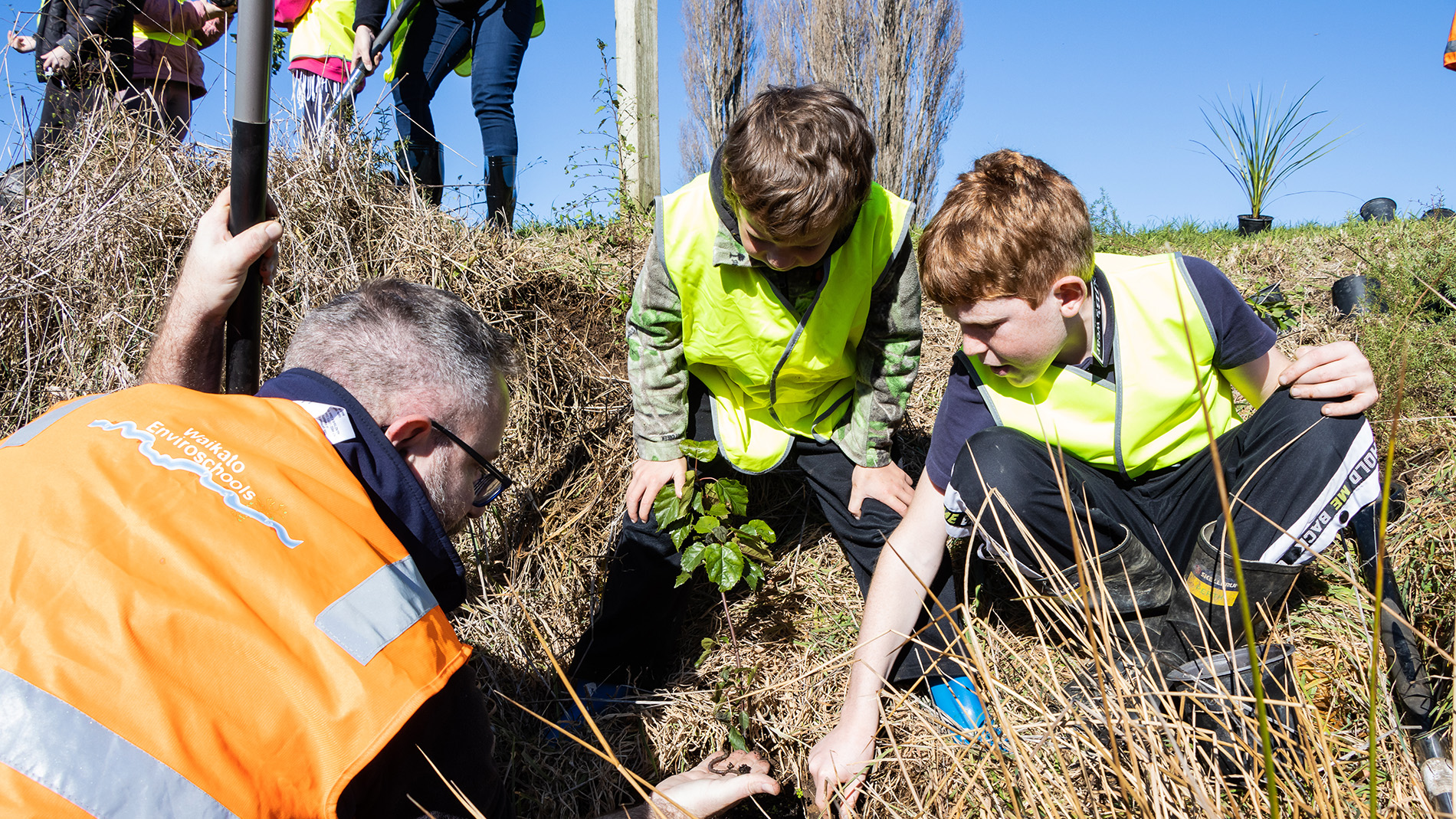
What is Enviroschools?
Enviroschools is a nationwide environmental action programme that supports schools and early learning centres to create healthier, more sustainable places through learning and taking action together. The kaupapa is grounded in caring for people and the environment, now and for the future.
At the heart of Enviroschools are tamariki, students and their ideas. Learners explore their local environment, connect with their place and community, then plan, design and lead practical sustainability projects that respond to what matters locally.
Every Enviroschools journey is different. Schools and centres work in ways that reflect their own ecology, history, culture and community, while being guided by shared principles: empowered learners, learning for sustainability, honouring Te Ao Māori, respect for diversity, and sustainable communities.
In Waikato, the programme is supported in schools by Waikato Regional Council alongside district and city councils. Schools that join commit to a whole-school sustainability journey, enabling students to take action on real-life projects, share learning across the Enviroschools network, and participate in networking and professional development opportunities. We also partner with Waikato Kindergarten Association and Central Kids Kindergarten Association who facilitate Envrioschools in their centre networks.
Benefits can include improved classroom and outdoor environments, more efficient use of resources, stronger waste reduction and recycling practices, healthier school systems, student leadership, and stronger connections between staff, students, whānau and the wider community.
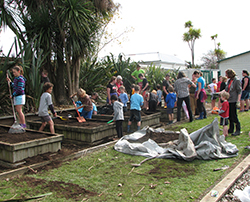 Sense of place
The whole school environment is a learning resource.
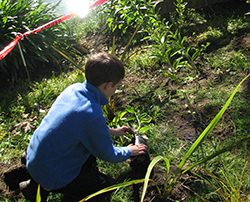 Participation
Involving the whole school community, including students, teachers, caretakers, boards of trustees, families / whānau and the wider community.
 A sense of purpose
Students are inspired to create a healthy, peaceful and sustainable school.
Enviroschools evaluation report
Teachers are inspired by facilitators and connected to relevant resources and opportunities tailored to their needs and those of their school.
WRC Enviroschools Evaluation Report, 2026
Schools strongly value the support they receive from Enviroschools facilitators, who are; approachable, knowledgeable and inspiring, with the ability to tailor support to each school’s context, priorities and stage of the Enviroschools journey.
Facilitators help teachers prioritise action, connect learning to the curriculum, access relevant resources and build links with local groups, events and the wider Enviroschools network.
They also enable teachers to empower students to lead action learning: thinking of an idea, planning, consulting and carrying out real-world projects that build confidence, skills and a sense of self-efficacy.

Enviroschools links
Value for teachers and schools
“Enviroschools is so integrated with literacy and numeracy. You can do something for a week and bring in so many curriculum areas. It just makes sense; it’s time-efficient when there are so many demands on teachers.”
School interviewee - (WRC Enviroschools Evaluation Report, 2026)
Enviroschools gives teachers practical support to bring rich, local and authentic sustainability learning into the curriculum. It helps make complex topics meaningful, connects learning with real-life action, and supports teachers to build cultural connections to Te Ao Māori while learning alongside their students.
Teachers also benefit from professional development, reflection on practice and support to connect with opportunities and experts to help bring sustainability learning to life inside and outside the classroom. The programme can strengthen teacher confidence, wellbeing, agency and engagement.
Through the Enviroschools network, schools gain access to tools, resources, relationships and practical partnerships. Teachers can connect with other schools and staff, share ideas, and use real-life local contexts to enrich learning.
Students and Schools are highly engaged in environmental action with strong evidence of student empowerment at all levels of schooling. The most common action was environmental restoration with impacts recognised in the following areas in particular: waste reduction and resource reuse; habitat restoration and biodiversity; waterway health awareness and action. Enviroschools success and learning are shared across the Waikato network as well as more broadly to inspire others (WRC Enviroschools Evaluation Report, 2026)
Ki to hoe! | Get involved!
If you'd like your school to get involved in Enviroschools or want to learn more.
https://www.waikatoregion.govt.nz/services/education/enviroschools/
