
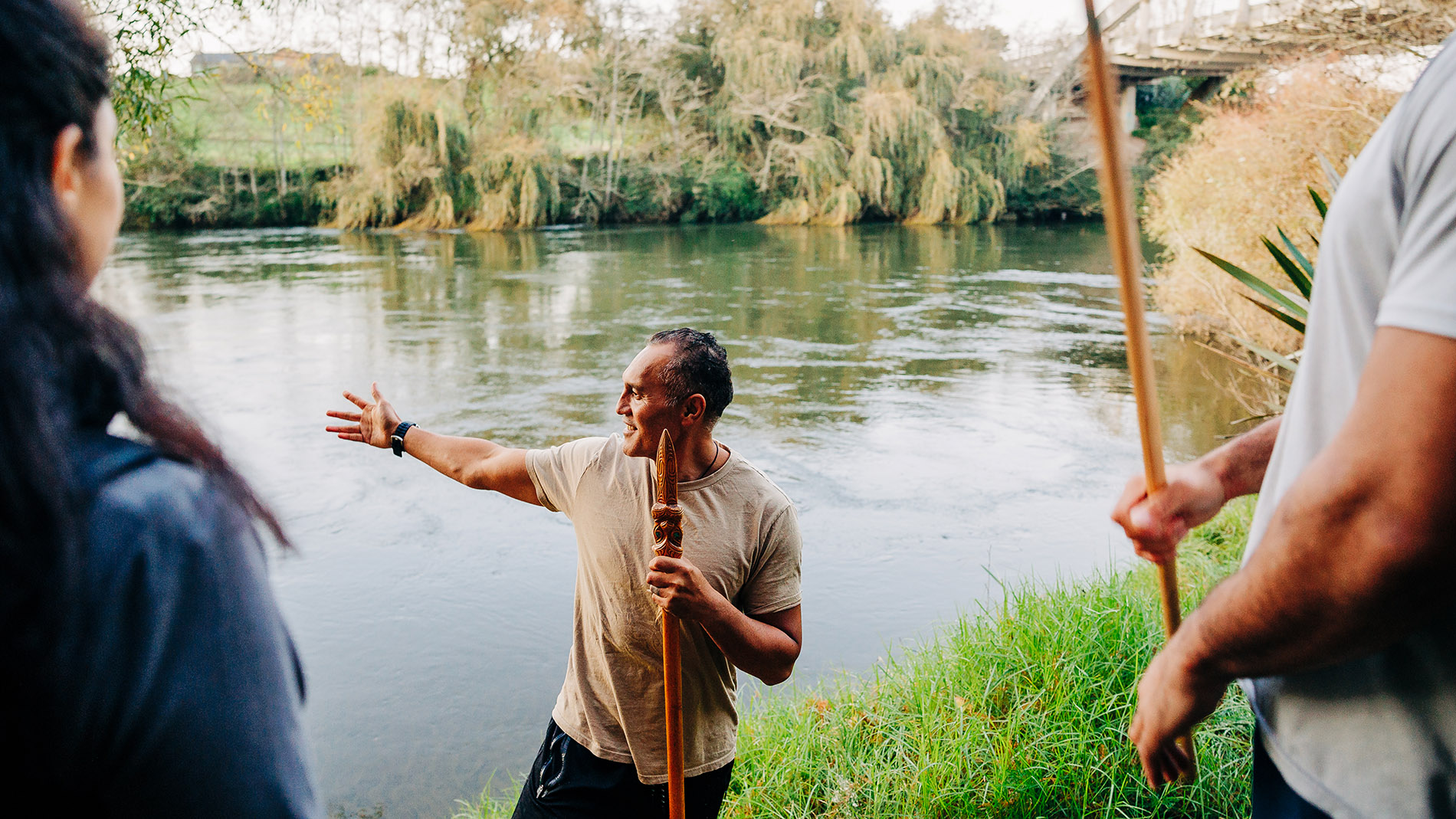
Our work spans a wide range of planning and policy matters, many of which rely on strong, respectful and meaningful engagement with iwi Māori.
Across the organisation, we work closely with iwi Māori on a wide range of projects, engaging regularly at governance, operational and community levels. These ongoing conversations help ensure iwi perspectives, aspirations and mātauranga are embedded in our work.
Council continues to invest in strengthening these relationships, acknowledging that working collaboratively with iwi enriches our understanding, improves decision making and supports shared stewardship of the places we all call home.
Iwi in our region
The principal iwi groups in the region are Waikato, Maniapoto, Raukawa, Hauraki, Te Arawa and Tūwharetoa. Within these collective iwi groups there are numerous iwi and hapū, often represented in an official capacity by an iwi authority, iwi trust board or rūnanga.
Iwi across the region have expressed a strong desire to work in various forms of partnership with Waikato Regional Council. Some partnerships are established through Treaty settlements, while others are developed through memorandum of understanding and a range of other formal and informal relationships.
Te ao Māori
Māori have comprehensive customs for managing and protecting natural resources, such as whakapapa, kaitiakitanga, rāhui and the recognition of mauri.
Whakapapa connects people to the natural world – plants, animals, land, air and water – and underpins an integrated, ecosystem based approach to managing land, water and natural resources.
The council recognises the significance of this worldview and is committed to integrating it alongside scientific knowledge across our activities and projects.
Resource consents
Mana whenua and Waikato Regional Council share an important partnership that acknowledges the role and responsibilities of mana whenua as kaitiaki within their rohe (tribal area), especially in places of cultural and environmental significance.
Engagement with mana whenua may be required when applying for resource consent, and early discussions with mana whenua authorities form a key part of a resource consent application.
Māori Engagement Framework
Where Joint Management Agreements, Memorandum of Understanding or any other similar high-level agreements exist, these will be considered as a starting point when engaging with Māori. For mana whenua groups without a formal agreement a separate engagement plan will be developed as appropriate.
A Māori Engagement Framework, developed in 2017, initially formed Schedule 3 of the Significance and Engagement Policy. This framework is now a standalone document which provides guidance on best practice engagement to those looking to engage with Māori.
