
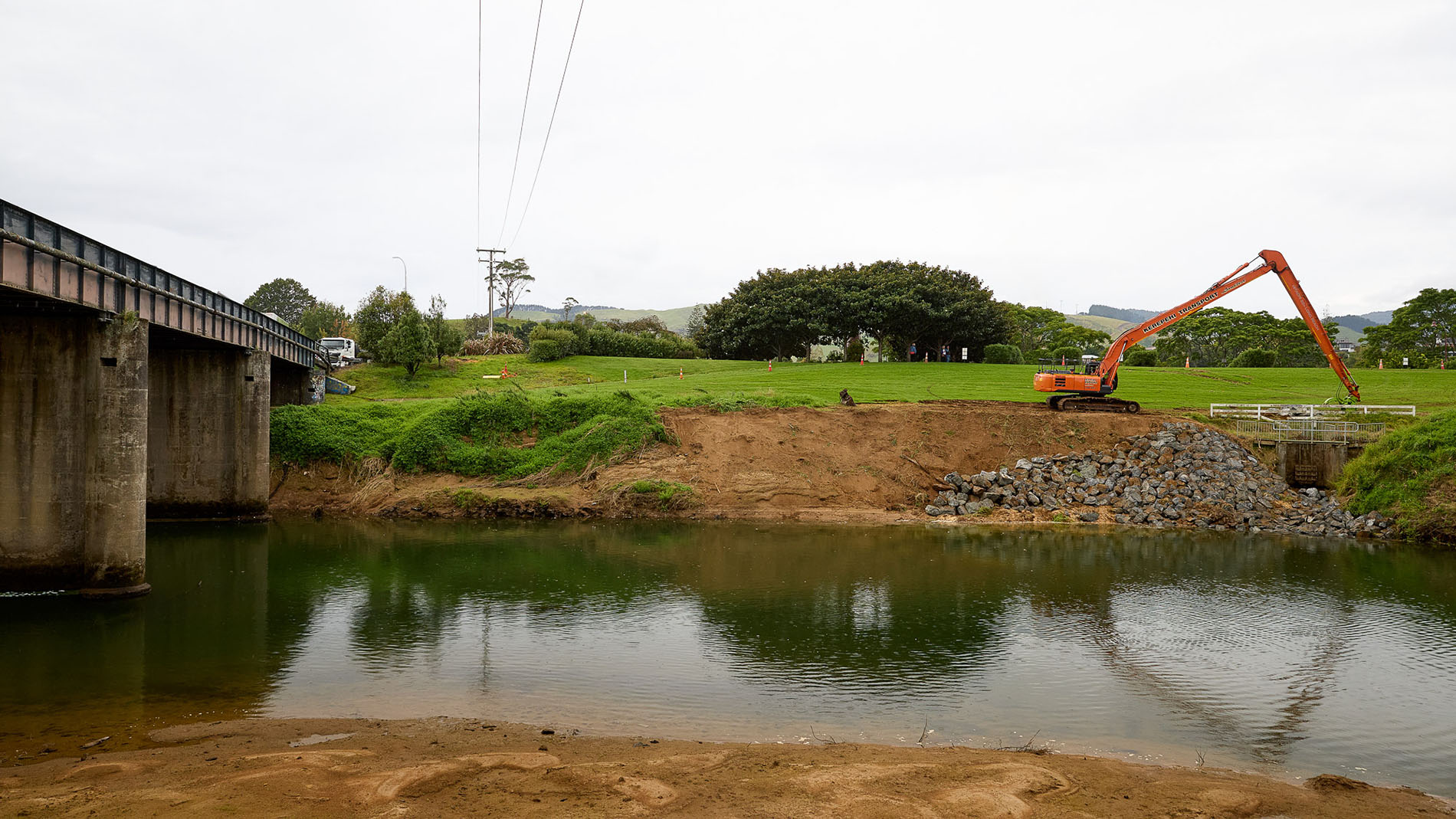
Waikato Regional Council helps manage rivers to reduce impacts from flooding, improve riverbank stability and water quality, and support environmental outcomes.
Our river management programme is delivered in collaboration with landowners, iwi, communities and stakeholders. It forms part of an integrated catchment approach alongside flood protection, soil conservation and environmental restoration.
River management activities help mitigate flood and erosion risk by improving how rivers store and move water, which reduces damage during high rainfall events.
Living near a river, or owning land that contains a river, offers many benefits but also involves inherent risks. Rivers are dynamic natural systems that can flood, erode banks and change course – particularly during periods of heavy rainfall. While river management and flood protection works can reduce these risks, they cannot eliminate them entirely.
Benefits of good river management
Good river management helps protect people, land and infrastructure from damage and delivers multiple environmental, community and cultural benefits.
- Reduces erosion – protecting valuable soils.
- Reduces sedimentation – improving water quality.
- Reduces damage from flooding – protecting land and infrastructure.
- Improves ecological outcomes and biodiversity – supports habitat for aquatic plants and animals, including whitebait.
- Enhances recreational activities, such as swimming and gathering kai.
- Protects sites of cultural significance.
- Builds future resilience.
Landowner responsibilities
Landowners have primary responsibility for maintaining riverbanks on their property. You can help protect the health of rivers and streams by:
- managing stock to keep them out of rivers and other waterways, including through permanent fencing
- planting appropriate vegetation to protect and stabilise banks and provide shade; and reduce temperatures in smaller waterways
- maintaining vegetation to prevent waterway obstruction
- removing and disposing of debris and other material adjacent to rivers to prevent waterway obstruction
- managing animal and plant pests
- maintaining privately-owned assets, such as bridges, fords and water takes, to prevent debris accumulation
- remediating erosion caused by, or posing a risk to, privately-owned river assets.
River works must comply with applicable environmental regulations, including the Resource Management Act 1991, the Waikato Regional Plan and all other relevant statutory requirements.
What we do
Waikato Regional Council supports landowners to undertake activities along priority waterways. This work ranges from routine river maintenance to larger scale erosion control and stabilisation works. Examples include:
- annual inspections along key rivers
- removal of obstructions that restrict flows or present significant risk in future weather events
- planting and managing vegetation to reduce erosion
- fencing of river margins where appropriate
- enabling passage and enhancing habitat for native fish species
- preventing and mitigating erosion through the construction of structures such as rock revetments, rock or vegetation groynes, and gradient control structures
- channel realignment
- gravel and sand management.
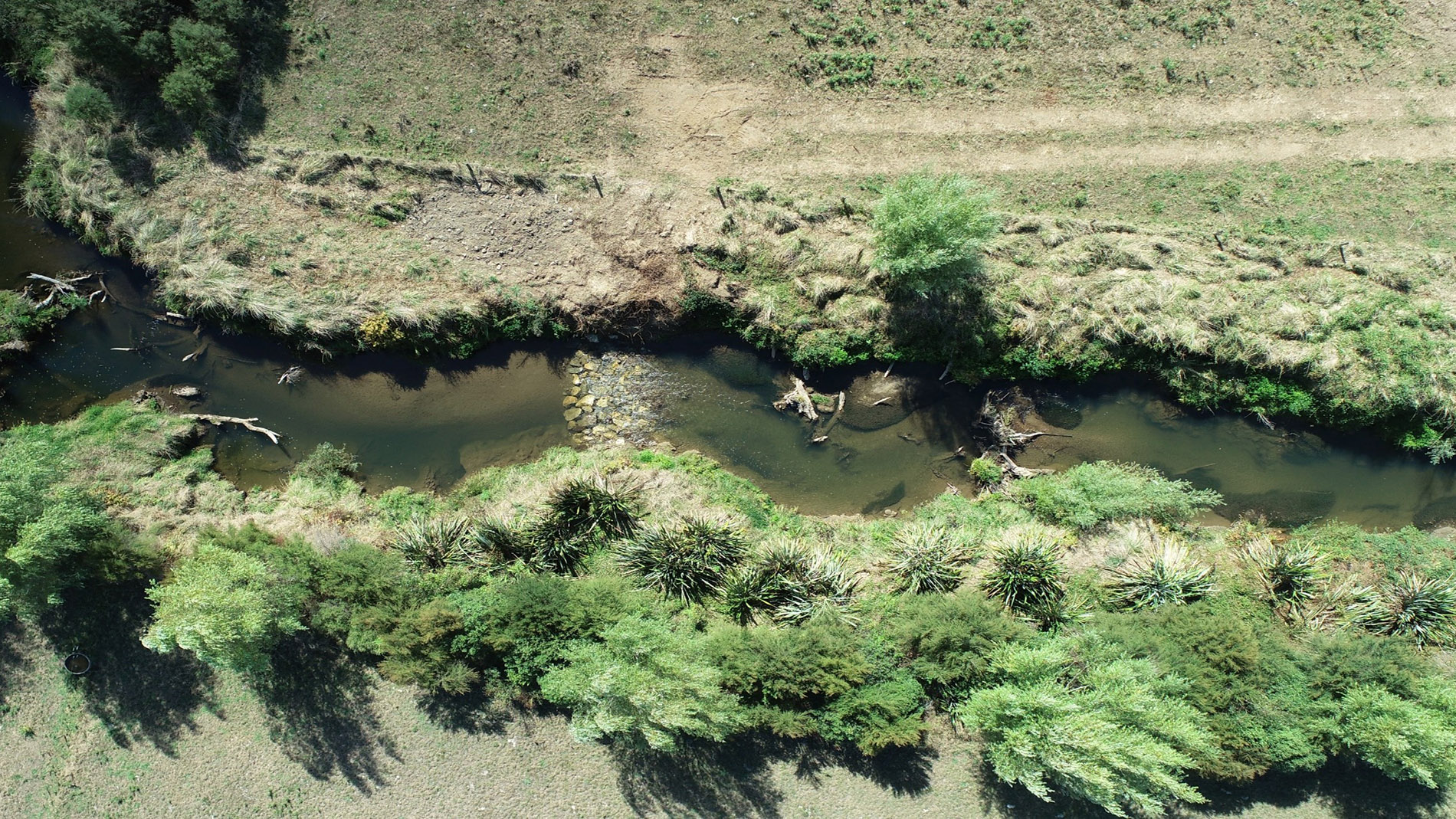
An established river management site showing gradient control structures, groynes, plantings and habitat enhancement.
Significant river management works are usually focused on specific reaches and often require resource consent. This work is carefully assessed and prioritised as it can involve substantial investment and affect multiple landowners and downstream communities.
Note: We are not responsible for – nor are we able to support – river management works on all waterways. Landowners remain primarily responsible for maintaining riverbanks on their property, including repairing flood damage to private land and infrastructure and the removal/disposal of associated debris.
Examples before and after
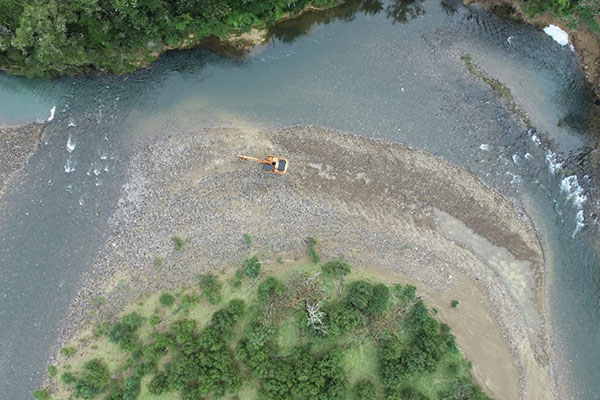 Waiwawa River before channel realignment works.
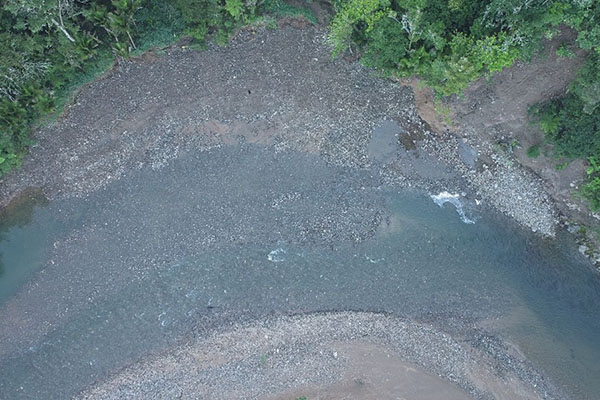 Waiwawa River after channel realignment works.
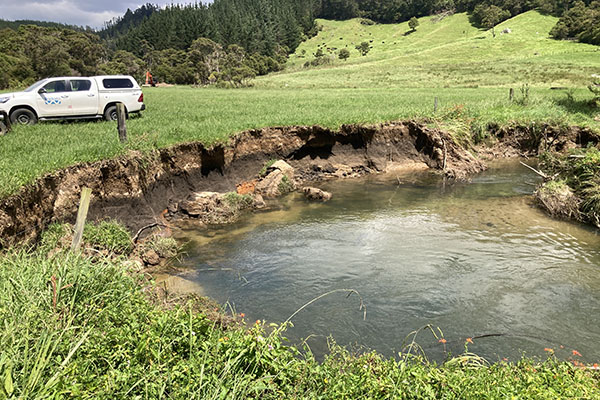 Boom Stream before rock revetment works to mitigate erosion.
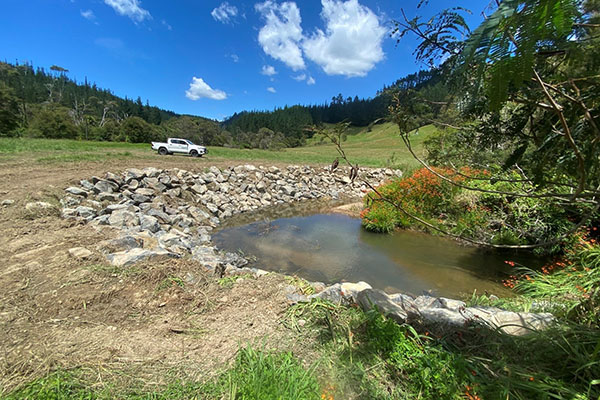 Boom Stream after rock revetment works to mitigate erosion.
Working at catchment scale
Our river management activities are planned and delivered within defined catchment and management zones across the region:
- Coromandel
- Waihou Piako
- Lake Taupō
- Upper Waikato
- Central Waikato
- Lower Waikato
- Waipā
- West Coast.
Service levels and priorities differ between these zones, depending on river characteristics, funding, flood and erosion risk, community needs, and whether the river is within a formal flood or river control scheme.
Who benefits - and who pays?
River management delivers benefits at different scales.
- Local benefits for landowners and communities directly impacted by erosion or flooding.
- Catchment benefits such as reduced sediment to waterways.
- Regional benefits, including less impact on infrastructure during floods, improved water quality and healthier river systems.
Depending on the activity, and benefits, costs may be met through a mix of regional rates, targeted zone or catchment rates, and direct contributions from landowners where works provide specific local protection. We also apply for contributions from central government for projects that build community resilience or assist with flood recovery; and other funders where works contribute to environmental outcomes.
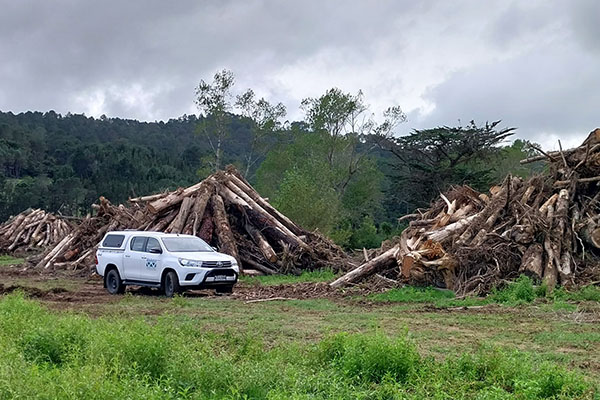 Vegetation removed from the Parakau Stream channel after Cyclone Gabrielle in 2023.
How we can help you
Information, advice and co-ordination
We can provide advice and information to landowners on good river management practices and co-ordinate activities of contracted work. We also undertake annual inspections of priority rivers and streams.
The removal of obstructions
We can undertake the removal of major blockages and obstructions (beyond normal landowner maintenance) where they are causing or could increase flood and erosion risk.
Erosion control
In a priority catchment, we can assist with the control of significant riverbank erosion that impacts one or more properties.
Gravel management
We can assist with the removal of gravel built up in a channel that could cause future flooding.
Funding
We can provide funding assistance for river management activities in priority waterways. Depending on the activity, landowners are required to contribute financially and/or through in-kind contributions, for example, dropping/reinstating fences and disposal of material removed from the channel. Funding assistance may not be available where the waterway will not have full stock exclusion. Funding is subject to conditions and landowners are encouraged to contact their local river management officer to discuss options.
By working together, Waikato Regional Council and landowners can ensure our collective responsibilities are met and our rivers are healthy and well managed.