
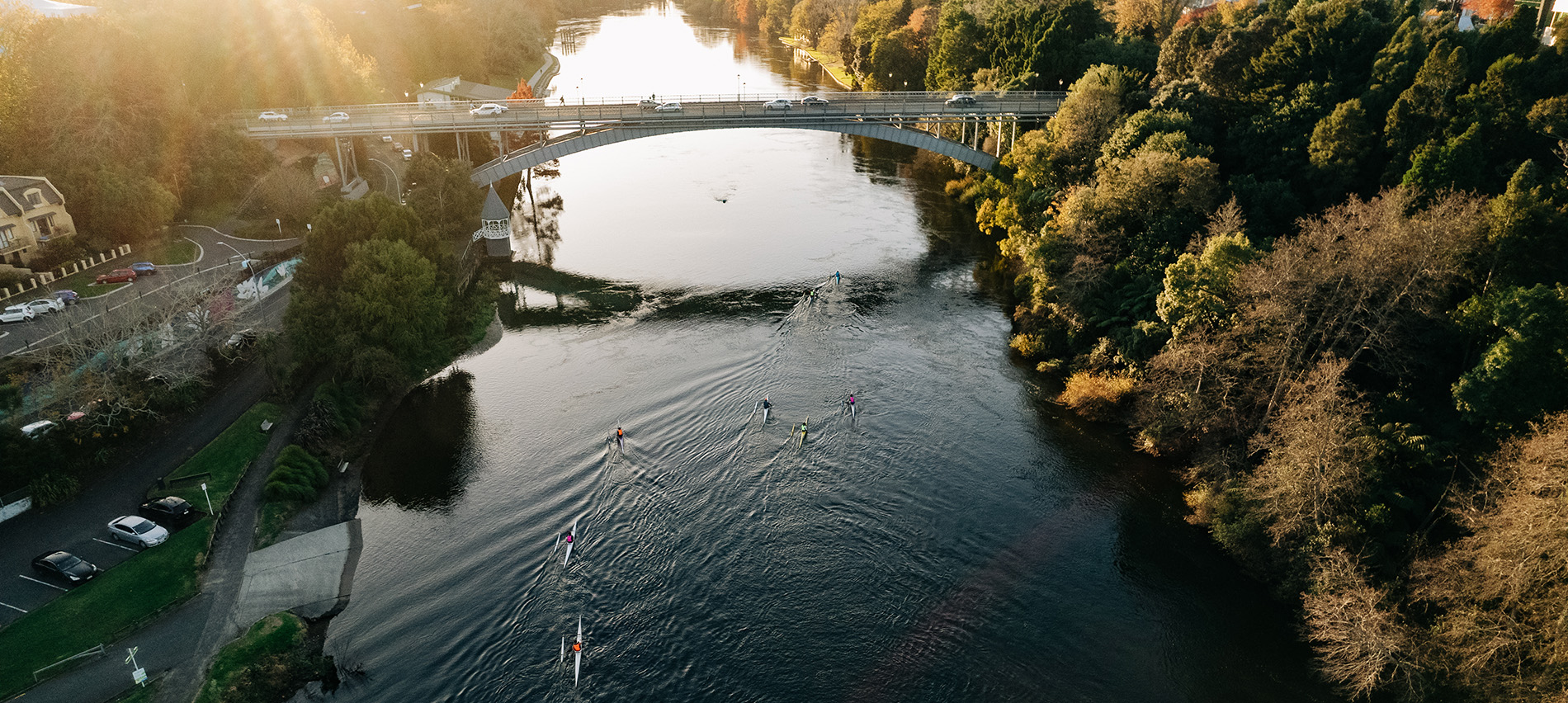
The Waikato and Waipā Rivers are a significant part of our region’s identity, environment and wellbeing. They sustain our communities, support our economy and hold deep cultural significance. Te Ture Whaimana o te Awa o Waikato – the Vision and Strategy for the Waikato and Waipā Rivers sets out how we collectively protect and restore the health and wellbeing of these waterbodies so they can thrive for generations to come.
Created through the Treaty settlement process and guided by the principle that the river’s wellbeing must come first, Te Ture Whaimana brings together iwi, councils, government agencies and communities in a shared commitment to care for the Waikato and Waipā Rivers as living, interconnected systems. It is the foundation for how we manage, use and look after the rivers today, and how we ensure their mauri is strengthened long into the future.
About Te Ture Whaimana
Te Ture Whaimana o te Awa is the vision and strategy for restoring and protecting the health and wellbeing of the Waikato and Waipā Rivers. It has legal status as the primary direction setting document, which means it sits above all regional planning and policies, and guides every decision affecting the rivers and their catchments.
The area the vision and strategy applies to is the Waikato River from Huka Falls to Port Waikato and the Waipā River from its source to its confluence with the Waikato River.
Te Ture Whaimana recognises the Waikato and Waipā Rivers as living ancestors and requires councils, government agencies, iwi and communities to put the rivers health first. Its focus is long term restoration, shared responsibility and caring for the river as a connected, living system.
Waikato Regional Council plays a key role in giving effect to Te Ture Whaimana. All council plans, policies and decisions, whether setting water quality limits, managing land use, issuing consents or designing restoration programmes, must support its vision and strategy.
The council also works alongside iwi and the Waikato River Authority to support restoration projects, monitor the rivers condition and enforce rules that protect their health, helping ensure the wellbeing of the Waikato and Waipā Rivers remain at the centre of regional decision making.
Treaty settlement legislation
Legislation was passed in 2010 covering Waikato-Tainui and its involvement in co-managing the Waikato River from the Karāpiro Dam to Te Puaha o Waikato (Port Waikato).
Later that year legislation was passed covering Ngāti Tūwharetoa, Raukawa and Te Arawa river iwi (specifically the hapū Ngāti Tahu - Ngāti Whaoa, Ngāti Kearoa - Ngāti Tuarā and Tūhourangi - Ngāti Wahiao). The co-management arrangements under this bit of legislation covers the Waikato River from Te Toka a Tia near Taupō through to Karāpiro.
A third piece of co-management legislation covering Ngāti Maniapoto – the Ngā Wai o Maniapoto (Waipa River) Act 2012 – came into effect in April 2012. It was the catalyst for Ngāti Maniapoto to enter into co-management arrangements with local government authorities for the Waipā River.
Waikato River Authority
The Waikato River Authority is responsible for implementation of, and changes to, the Vision and Strategy for the Waikato River.
The authority started operating in December 2010, and is equally represented by Crown (5) and iwi (5) appointees. Crown appointees include a person nominated collectively by local Waikato councils.
Authority decisions are made by consensus, but there are mechanisms in the legislation to elevate matters to the Minister for the Environment where agreement cannot be reached.
The Waikato River Authority is also responsible for the Waikato River Clean-Up Trust, and allocates funds from the trust for river clean-up projects.