
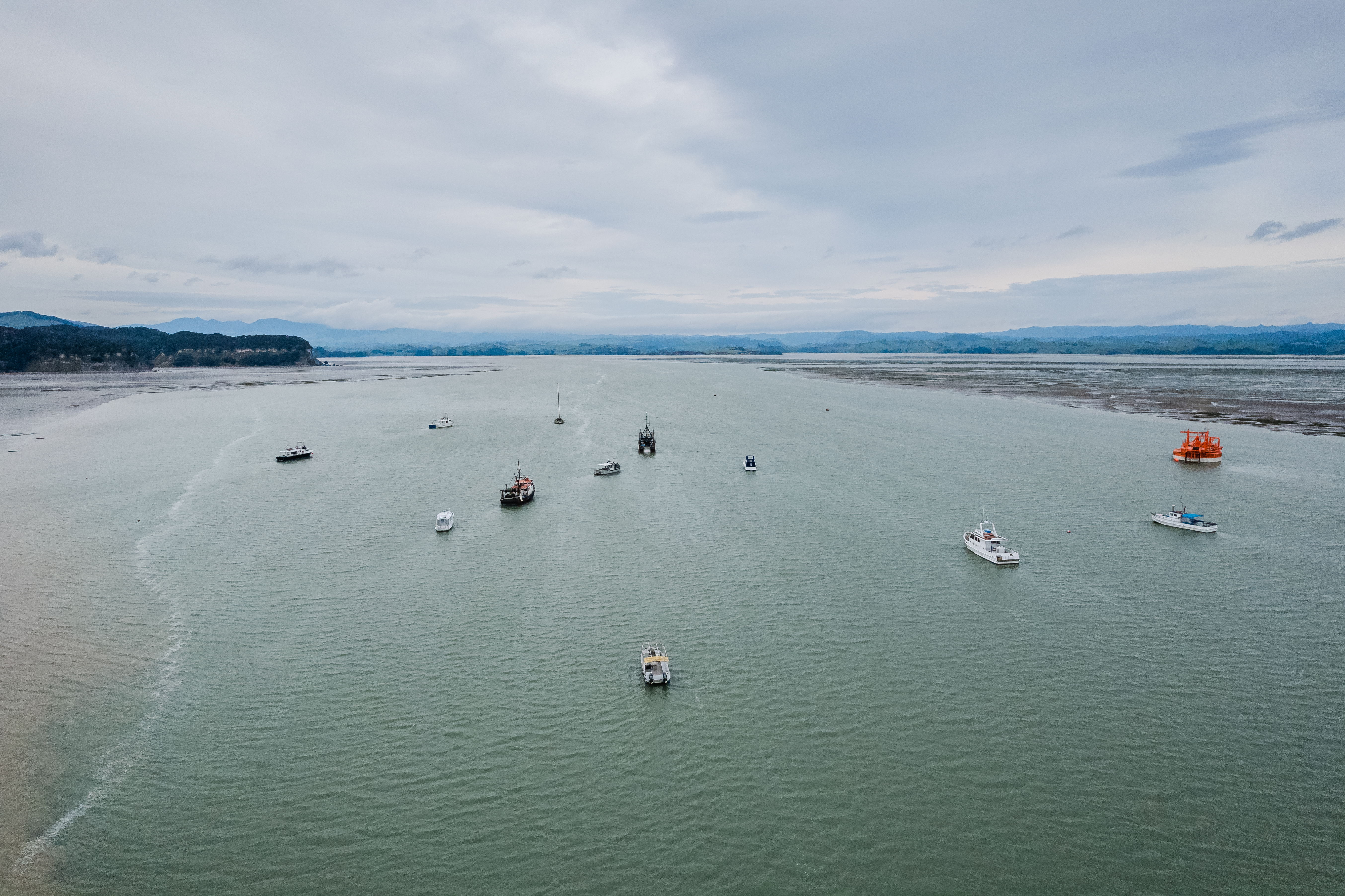
"Kāwhia Moana means so much to the people of Kāwhia."
Thomas Tai, Ngāti Hikairo
Kāwhia Moana is a taonga.
Safeguarding it takes more than equipment and training. It also relies on strong relationships, local knowledge and a shared commitment to caring for the moana.
Those elements came together during our recent large-scale marine oil spill response exercise in Kāwhia Harbour.
Mana whenua, local marine farm staff and members of the Kāwhia Boating and Angling Club joined us to share their firsthand knowledge of the moana and gain a better understanding of the complexities involved in responding to a marine oil spill in their rohe.
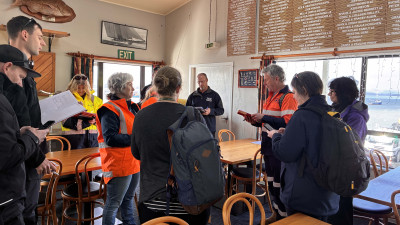
Locals community members observing an IMT update
Waikato Regional Council holds training exercises like this twice a year across the Waikato region to meet our obligations under the Maritime Transport Act and test our preparedness for Tier 2 (regional) oil spill events. They are independently assessed by Maritime New Zealand (MNZ).
And despite what you might assume, they're not always on the coast. Some exercises make use of the calmer conditions found on lakes, such as Huntly's Lake Puketirini, so our staff can focus on equipment deployment. Other times they might be a desktop scenario that tests our response team's capacity to deal with difficult and changing logistical challenges.
Or, like September's Exercise Kārewa in Kāwhia, they might combine planning with equipment deployment on the moana itself. The realistic exercise location came complete with the very real challenge of effectively deploying booms and keeping them in place while a high spring tide rolled back into the harbour.
Why Exercise Kārewa?
Kārewa is the name of an island, also known as Gannet
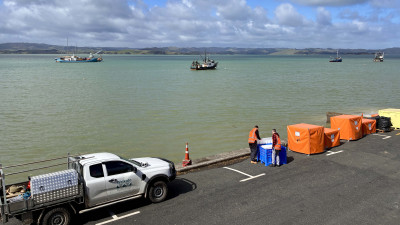
Response equipment and vehicles at the boat ramp during Exercise Kārewa
Island, which sits northwest of the mouth of Kāwhia Harbour. It is also a te reo Māori noun meaning water surface, buoyancy or lifebelt.
Our marine oil spill exercises bring together Waikato Regional Council operational, harbourmaster, emergency and incident management staff. Each exercise is based on a scenario, with Exercise Kārewa revolving around the hypothetical sinking of a 37-metre commercial vessel off Tauratahi Point near the Kāwhia Harbour mouth.
Facing a situation involving 7000 litres of fuel and oil leaking into the water and entering the harbour on an incoming tide, the response team was tasked with deploying containment booms and managing key response functions, including oiled wildlife response, intelligence, planning, logistics, communications and iwi liaison.
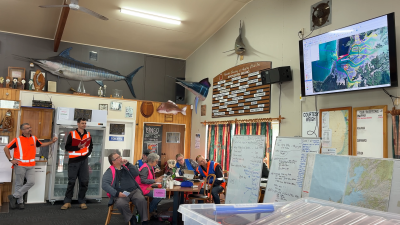
Oiled wildlife, intelligence and planning teams hard at work.
Hydrocarbons? Hold on, isn't this all about oil?
Not quite. When we talk about oil spills, we mean the release of contaminants that are crude or refined petroleum products, such as diesel, petrol, kerosene and lubricating oils.
Waikato Regional Council emergency management officer George McQuillan, who authored the exercise, said it was designed to test all aspects of a regional response while reflecting the challenges of a realistic spill event.
"While we hope we never need to respond to an event of this scale in real life, spills affecting our region's coastal and marine environments do occur from time to time, requiring the council to lead and manage significant responses that draw on staff from across the organisation. That's why it's important we regularly put our people, equipment and systems to the test," he said.
George, who also served as the exercise controller during Kārewa, noted how weather and tidal conditions added another layer of complexity to the exercise.
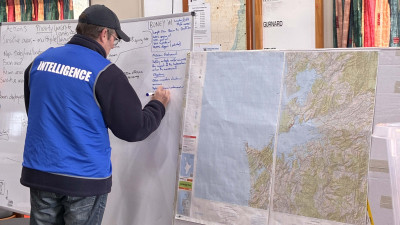
Intelligence Manager reviewing a map during the Kārewa response briefing
"Conditions on the day included high spring tides, strong winds and choppy seas, all of which would influence a real response. Our teams also had to consider the proximity of marine farms, nearby shellfish beds, native wildlife and sites of significance to iwi."
"It was a challenging scenario. But the team, who were engaged and enthusiastic, did a fantastic job of minimising the impact of the spill on the environment. In a real event, marine oil spills pose wide-ranging risks to wildlife, economic activities and cultural and recreational values, highlighting the importance of being prepared to respond swiftly and effectively," he said.
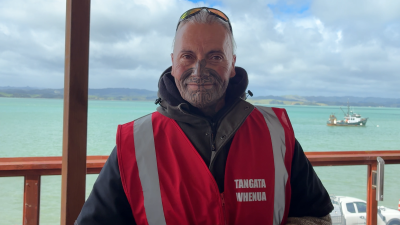
Portrait of a Tangata Whenua representative overlooking Kāwhia Harbour during Exercise Kārewa
Ngāti Hikairo member Thomas Tai described Exercise Kārewa as a wonderful day.
"To be invited in to have a kaupapa, to discuss, and to actually bring in our rūnanga from Maketu, Ngāti Hikairo, Aotea, Mōkai Kāinga, Rākaunui, to bring all our marae together as a collective voice for the kaitiaki of our moana going forward... I'm very happy today."
"Kāwhia Moana means so much to the people of Kāwhia, because it's where we get our kai from, and we have done for 800-900 years. From the beginning of the Tainui waka until this day, our tamariki mokopuna feed from Kāwhia Moana."
"So, the whole moana is a treasure, a taonga, to us all."
How to avoid oil spills
Our team might be well prepared, but avoiding potential marine oil spills is always the top priority.
So, what can you do to reduce the chance of an oil spill occurring?
- Don't leave the fuel pump unattended when refuelling.
- Have clean-up material handy during refuelling.
- Regularly check fuel lines and tanks for faults.
- Ensure bilges are kept as oil-free as possible, especially if using automated bilge-pumping systems.
If you have a spill, make sure you report it as soon as possible. Call Waikato Regional Council's 24/7 freephone 0800 800 401.