
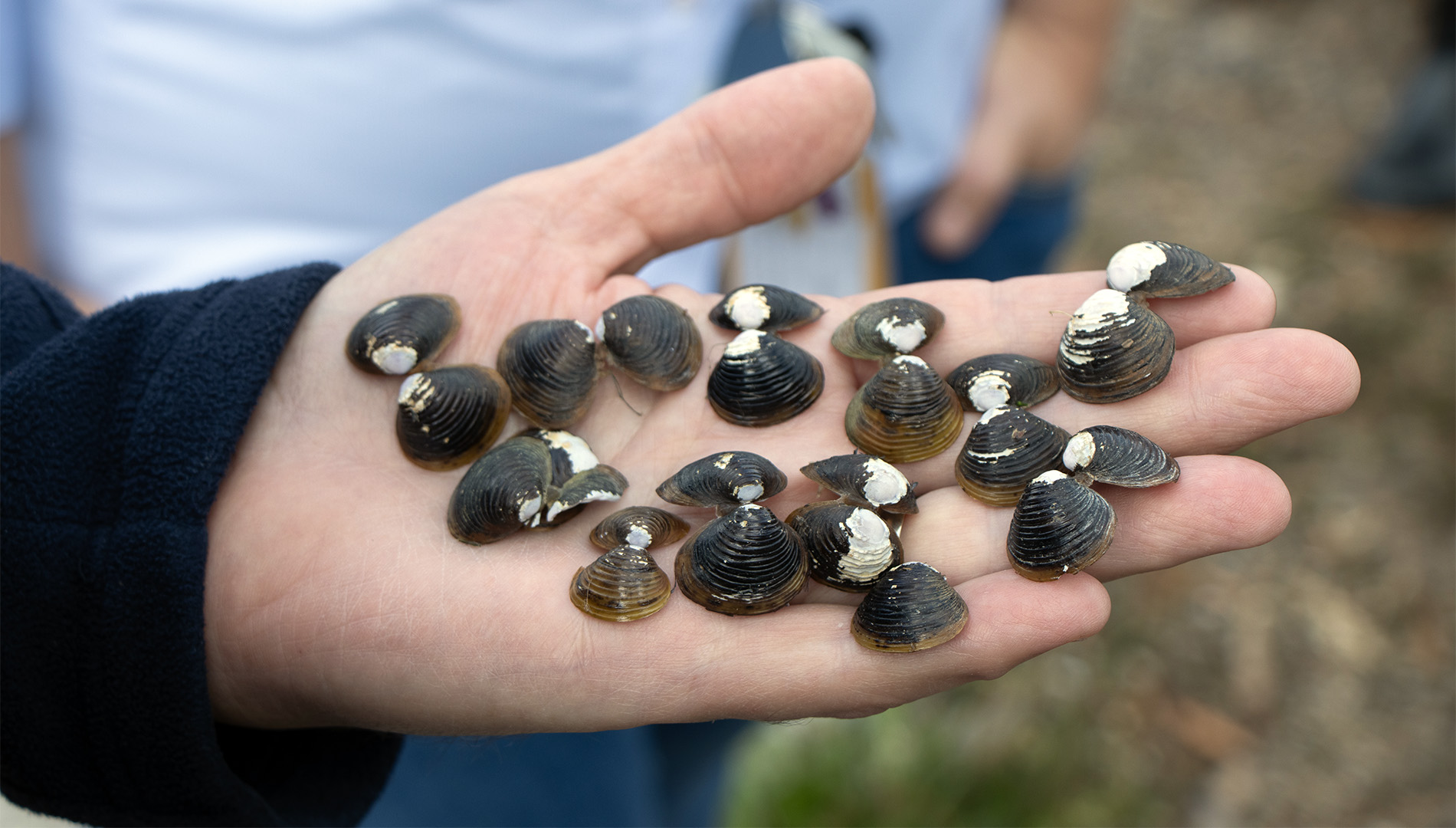
“We’re still learning about these clams and how best to manage them. But every step we take to reduce their spread helps protect our rivers and lakes for the future.” - Gordon Tieman, freshwater biosecurity officer.
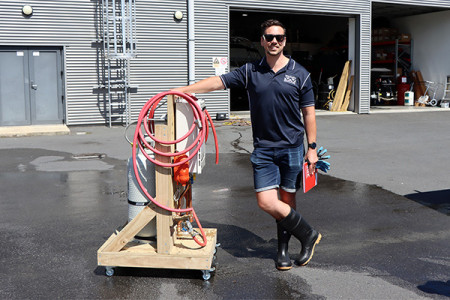
Gordon Tieman and the Tieman 1.0
You probably won’t see invasive freshwater clam juveniles on your boat or equipment.
But that doesn’t mean they’re not there.
These tiny hitchhikers can survive long enough to travel between waterways, with juveniles living up to two days out of water and adults lasting as long as 30 days.
Invasive freshwater clams were first found in the Bob’s Landing area of the Waikato River near Lake Karāpiro in early May 2023 and were identified as Corbicula fluminea. Since then, they’ve been confirmed throughout the Waikato River from Whakamaru dam downstream to Port Waikato. In March 2024, a second species, Corbicula australis, was found at the Lake Taupō Aqua Park in a small man-made lagoon.
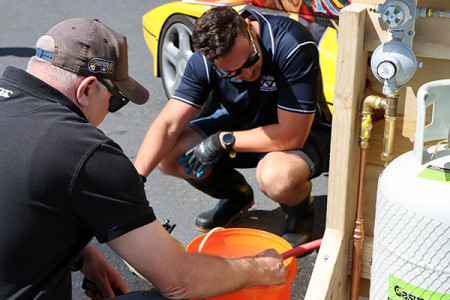
Test and trial time with Brett Bailey and Gordon Tieman
Clam chowder time?
Unfortunately, these clams aren’t even good for dinner. While they’re considered edible overseas, naturally occurring toxic elements like arsenic in the Waikato’s environment make these filter feeders not an ideal option for eating.
Stopping the spread
To help stop the spread, a Controlled Area Notice (CAN) is in place under the Biosecurity Act for the lower Waikato River - from the Whakamaru Dam to Port Waikato. The CAN restricts the movement of water and equipment out of the river and was updated in November 2024 to include a table of approved treatment options.
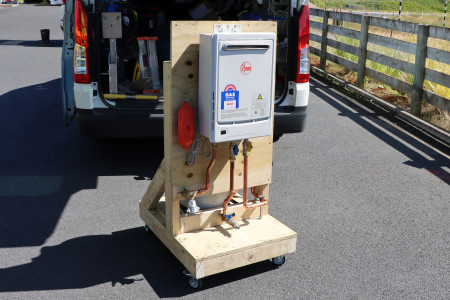
The Tieman 1.0 prototype
One of the first big tests of the CAN came during the Bridge2Bridge event in November 2024. The event draws ski boats from across New Zealand and Australia, and with them, the risk of spreading clam juveniles through ballast water.
That’s where Gordon Tieman, a freshwater biosecurity officer at Waikato Regional Council, stepped in with a bit of Kiwi (and Dutch) ingenuity.
“We knew ballast water was a high-risk pathway,” says Gordon. “Juveniles can get sucked into the tanks while boats are on the river, and if that water isn’t treated, it could carry them into other areas.”
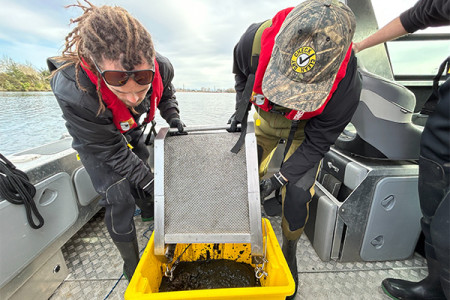
Benthic sled surveys use a dredge-type sampler
With support from Biosecurity New Zealand, Gordon began developing a practical solution. Drawing on his background in carpentry and aquatic ecology, he designed a prototype device that could heat ballast water to a temperature lethal to clam juveniles.
“Basically, we’re using a califont-style water heater to fill the ballast tanks with water heated to 60 degrees Celsius,” he explains. “We let it sit for five minutes - that’s enough to kill any juveniles that might be in there.”
The idea was based on research from Earth Sciences New Zealand (formerly NIWA), which showed 100 per cent mortality of clam larvae after five minutes at 50°C. Gordon’s version added a safety margin by going slightly hotter.
The prototype - affectionately dubbed the Tieman 1.0 - proved both effective and efficient. Most ballast tanks held around 150–200 litres, and the system could fill them in about 16 minutes.
“It worked better than we expected,” says Gordon. “And it cost a lot less to build than we thought it would.”
The success of the trial has sparked interest in refining the design for broader use. Earth Sciences New Zealand is now exploring how the prototype could be improved and potentially commercialised. This includes looking to build a larger unit able to supply larger volumes of hot water.
Practical solutions on land, too
The CAN also affected how biosecurity contractors operate along the river. Previously, they used river water to fill spray tanks for controlling pest plants like alligator weed and yellow flag iris. But with the presence of invasive clams, that’s no longer an option.
To keep the pest plant programme running while complying with the CAN, the council installed a 25,000-litre freshwater tank on council land in Rangiriri. The tank is filled by tanker using water sourced from outside the controlled area.
It’s now regularly used by contractors and council staff for filling spray tanks and washing down boats and equipment. A simple, but effective fix. “We’re still learning about these clams and how best to manage them,” says Gordon. “But every step we take to reduce their spread helps protect our rivers and lakes for the future.”
We have completed our first round of benthic sled surveys in the main hydro lakes upstream of Lake Maraetai. So far, there has not been any corbicula found upstream. Great news! Yes, but it needs a little bit of context, he says.
"The surveys use a dredge-type sampler that only picks up 7.5 m2 per transect run, so we can’t say with certainty that they haven’t spread beyond their known range.
"However, we did target high-use areas such as boat ramps so I’m at least confident they are not present in high numbers in those areas."
How to 'Check Clean Dry'
Check
Remove any visible matter, including any clams you can see, along with plant material or mud. Drain all river or lake water.
Clean
Wash down your gear, vehicle, watercraft, and trailer that has been in contact with river or lake water with tap water onto grass, beside the waterway or at home and not into a stormwater drain system. This will remove any remaining invisible material.
For absorbent materials that have been in contact with river or lake water use an appropriate treatment. You can find a guide here: Full list of treatment options
Treat residual water that always occurs when on-board ballast bladders or tanks have been pumped.
Dry
Allow gear to dry to touch, inside and out, then leave it to dry for at least 48 hours (2 days) before using again.
Dry areas inside the watercraft where water has pooled, for example with an old towel, and then leave the craft to dry for at least 48 hours (2 days). The hull of a watercraft will dry when towed.