
Whangamarino case study – Peter Buckley
For more than a century, Island Block has been home to three generations of the Buckley family, a place where farming heritage and environmental responsibility now stand proudly side by side.
Restoring biodiversity, protecting waterways: A legacy of environmental stewardship
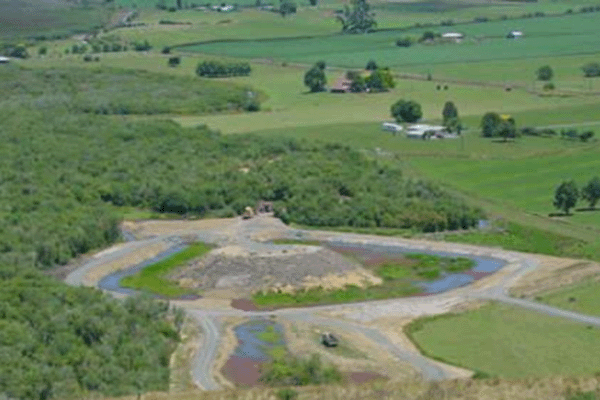
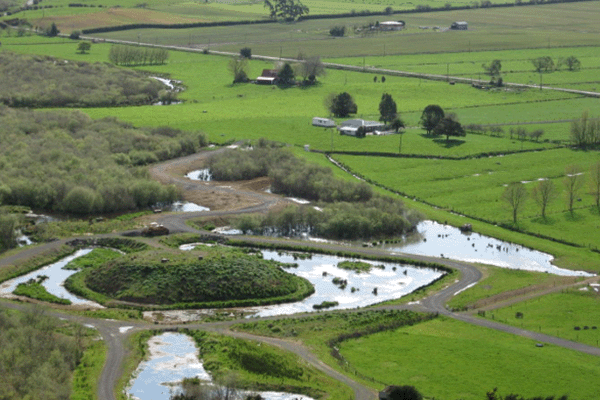
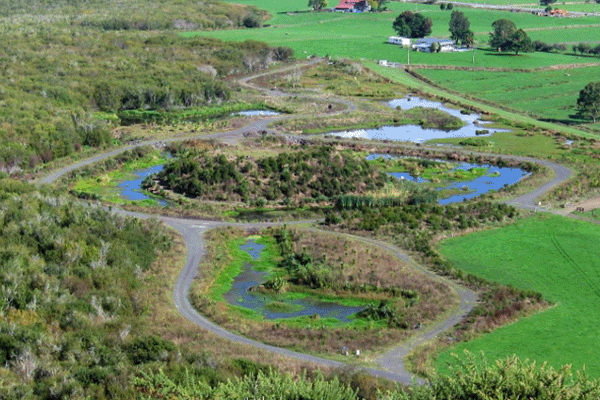
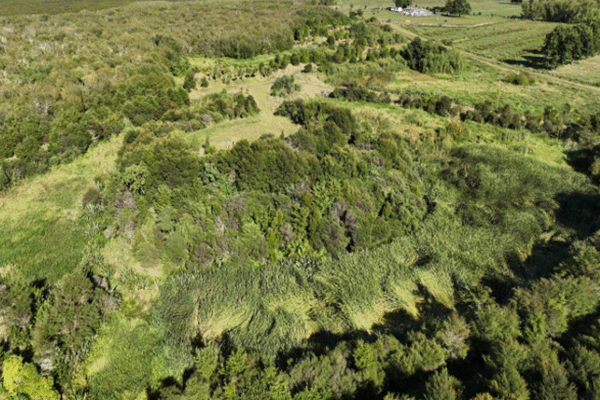
What began as a modest family farm in the 1920s grew alongside the development of a local quarry and over time, the two operations evolved into a unique partnership centred on restoring biodiversity and protecting precious waterways.
Island Block is nestled within the Whangamarino Wetland Catchment, an area internationally recognised for being an outstanding example of a wetland characteristic of its region and providing important habitat for a diverse range of indigenous plants and animals.
As Peter Buckley explains, “we believed that if quarrying was to continue here, it had to be done in a way that strengthened the natural environment, not exhausted it.”
So when commercial quarrying expanded in the late 1990s, the steep terrain and natural water flow patterns presented a challenge: how to prevent silt and runoff from entering the Whangamarino Wetland.
Rather than being daunted by the challenge, the Buckley family and quarry operator Kerry Reilly saw it as an opportunity to create something transformative.
“Water was an issue that was extremely important to both Kerry and I, so we wanted to see best practices put in place to ensure the water quality was protected,” says Peter. “Given that we take water from the stream for our farm, protecting it wasn’t optional; it was our responsibility.”
Together with experts from Waikato University, they designed a purpose-built wetland on 4.5 hectares of Buckley land to naturally filter stormwater from both the quarry and the farm prior to it entering the Whangamarino Wetland.
Using 50,000 cubic metres of quarry overburden, they created 1.25 kilometres of channels and ponds, an observation island and access routes that avoided disturbing sensitive peat swamp.
The project required significant investment, resource consents and community trust, and took nearly two years to complete. Peter says the outcome made it all worth it, “a thriving ecological sanctuary.”
Their collective efforts enabled natural filtration, extended water retention and encouraged the return of native species. Eels, kura, native fish, frogs, ducks and swans soon re established themselves, further supported by the removal of invasive willows and the planting of more than 15,000 native trees and shrubs.
Iwi, neighbours and local councils recognised their commitment to restoring ecological balance. DairyNZ also showcased their efforts to international visitors as a model of responsible land management and their project went on to win the 2014 MIMICO Environmental Excellence Gold Award and the International Caernarfon Award for its contribution to environmental innovation in the quarrying industry.
“This project has been a win/win for all concerned, demonstrating that farming and quarrying operations can be mutually enhanced by this type of joint co-operative development,” reflects Peter.
Though the farm has since changed hands, Peter still lives beside the wetland, maintaining pest control and overseeing ongoing native restoration. The work is ongoing, but the message remains: environmental restoration is strongest when it is shared.
Today, the efforts of the Buckley family stand as a beacon of biodiversity restoration and responsible land management. “I’m confident that this will help lead the way for other industries and farmers to cooperate and demonstrate that we can all work together to create a cleaner New Zealand,” says Peter.